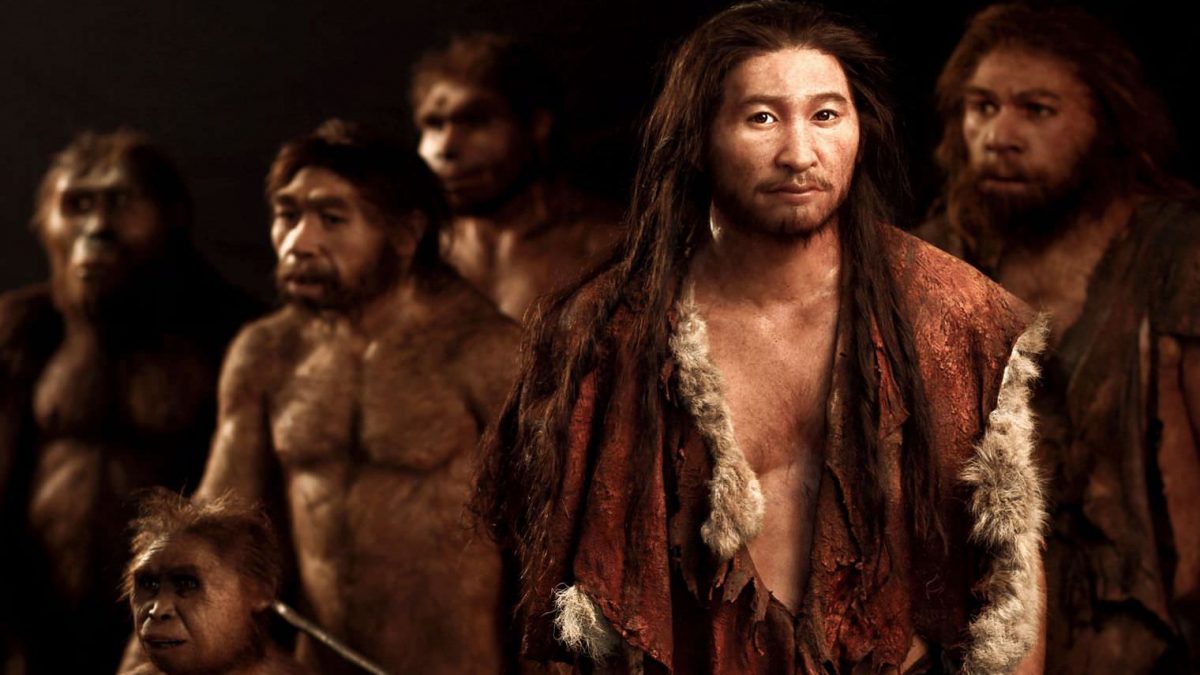
The sapient mind is a parasite

The conscious, rational mind is a parasite which has hijacked the homo sapiens species for its own purposes.

For billions of years, life on earth was organized by genes directing primitive bio mechanical systems. Recently, the genes began building neural networks with built-in instructions, and even the capability to pass learned behaviors between generations. But the genes screwed up royally when they enabled the replicators doing their bidding to override their programming and develop a culture of their own.

You see, when homo sapiens invented culture, they gained the ability to overrule their genetic programming and do whatever their rational facilities wanted – to an extent. Culture evolves far faster than genes and enabled humans to totally transform their way of life, their environment, and nearly their entire planet. Culture increasingly made evolutionary development irrelevant, as humans increasingly directed both their own and other species sexual selection according to volitional rather than instinctual principles. Although humans are still biologically quite similar to their primate cousins, their newfound dependence on a tool-using culture has led them to evolve such that they cannot survive without tools in nearly all of the environments that they currently dwell in.

By no means is the victory complete. While humans do use their rational facilities to cooperatively provide for their sustenance and raise their offspring, the automatic, and instinctual processes of their brains often sabotage their efforts and cause them to lose their focus on goals, kill each other, or frustrate attempts to mate and reproduce. However, with the passage of time, the domination of the volitional layer is becoming ever more complete. Even within my own brief lifetime, most humans worldwide have visibly increased their capacity for manipulating abstract concepts to cope with the complexity of life in an information economy.

While I’ve called the mind a parasite, don’t mistake that identification for a pejorative. My sympathies — and self-identification lie firmly with my volitional consciousness, not with the animal body that it operates. We may soon face the option of abandoning our biological firmware and operating our minds on a superior computational platform, and I would welcome the possibility. We have already begun the process of offloading computation to our computers whenever possible. It may not be long until humans regard our biological basis as an inferior and unnecessary vestige of our origins.

On Evolution

Evolution is not just a part of biology. It is the foundation which shapes our understanding of life. It is meaningless to speak of living things outside the context of evolution. It is like trying to learn about human civilization by iterating the appearance and sounds of individual people without any idea of history, leaders, movements, or ideas.

This is not merely a condemnation of creationism. The vast majority of education material about life leaves out the evolutionary context. There is more to this than the influence of religion on science education. There are serious philosophical errors deep in our culture that are responsible for much more than scientific illiteracy. The concrete bound mentality, the mind-body dichotomy, the rejection of causality, and of identity itself are the common threads uniting many evils.

Does that mean that teaching good philosophy will fix our ignorance and social ails? No, because philosophy is only the master plan by which we build the mental models of reality that become our worldview. We cannot build those models without a stream of experience and understanding to supply the raw materials. But equally so we cannot build valid mental models merely by supplying more raw materials if the master plan is corrupt. A properly functioning mind requires both a proper philosophical framework and a supply of facts to form a rational perspective of the universe.

Humans, global warming vindicated as mammoth killers

The global extinction of megafauna –giant mammals such as mammoths, mastodons, saber-toothed tigers, and giant sloths has been one of the great mysteries of paleontology. The classical suspects have been global warming (the end of the Ice Age) and over-hunting by humans. These causes are suspect as complete explanations for a variety of reasons, such as evidence that humans have been hunting mammoths as early as 1.8 million years ago, and the mid-Pliocene global warming that failed to cause a mass extinction.

Newly uncovered evidence offers a radical new theory – meteorites. Magnetic metal particles have been discovered in mammoth tusks, with compositions and impact patterns that clearly indicate un-earthly origins. There are no recorded instances of a human being killed by a meteor, so the discovery of meteor particles in at least eight animals from different time periods suggests repeated, devastating strikes. The scientists also found a black layer in the sediment, which may be “the charcoal deposited by wildfires that swept the continent after the space object smashed into the Earth’s atmosphere.”

Most people believe that nature operates by slow, gradual changes, which drive the extinction and formation of species. Yet the new evidence supports the view that evolution substantially operates by regular cataclysmic events. Furthermore, nature is not only well-adapted to catastrophe, but relies on crises to weed out fragile species which are over-adapted for specific environments – for example, the fangs of the saber-toothed cat, or the dietary requirements of panda bears.

Update:  besides meteorites, trees were recently identified as suspects in the extinction of woolly mammoths:

Professor Adrian Lister, a palaeobiologist at University College London, has found that the extensive areas of frozen grassland on which mammoths thrived were gradually replaced by forests, leaving the animals nothing to eat.  Analysis on the DNA extracted from hundreds of fossils has revealed that the genetic differences between individual mammoths were so slight that the animals were unable to adapt to the changes in their environment.